Portable LiFePO4 Battery for RV, Camper and Off-Grid Use: Buyer Guide
RV, camper and off-grid users are replacing lead-acid batteries with portable LiFePO4 batteries because they want lighter weight, deeper usable capacity and more stable power for daily equipment.
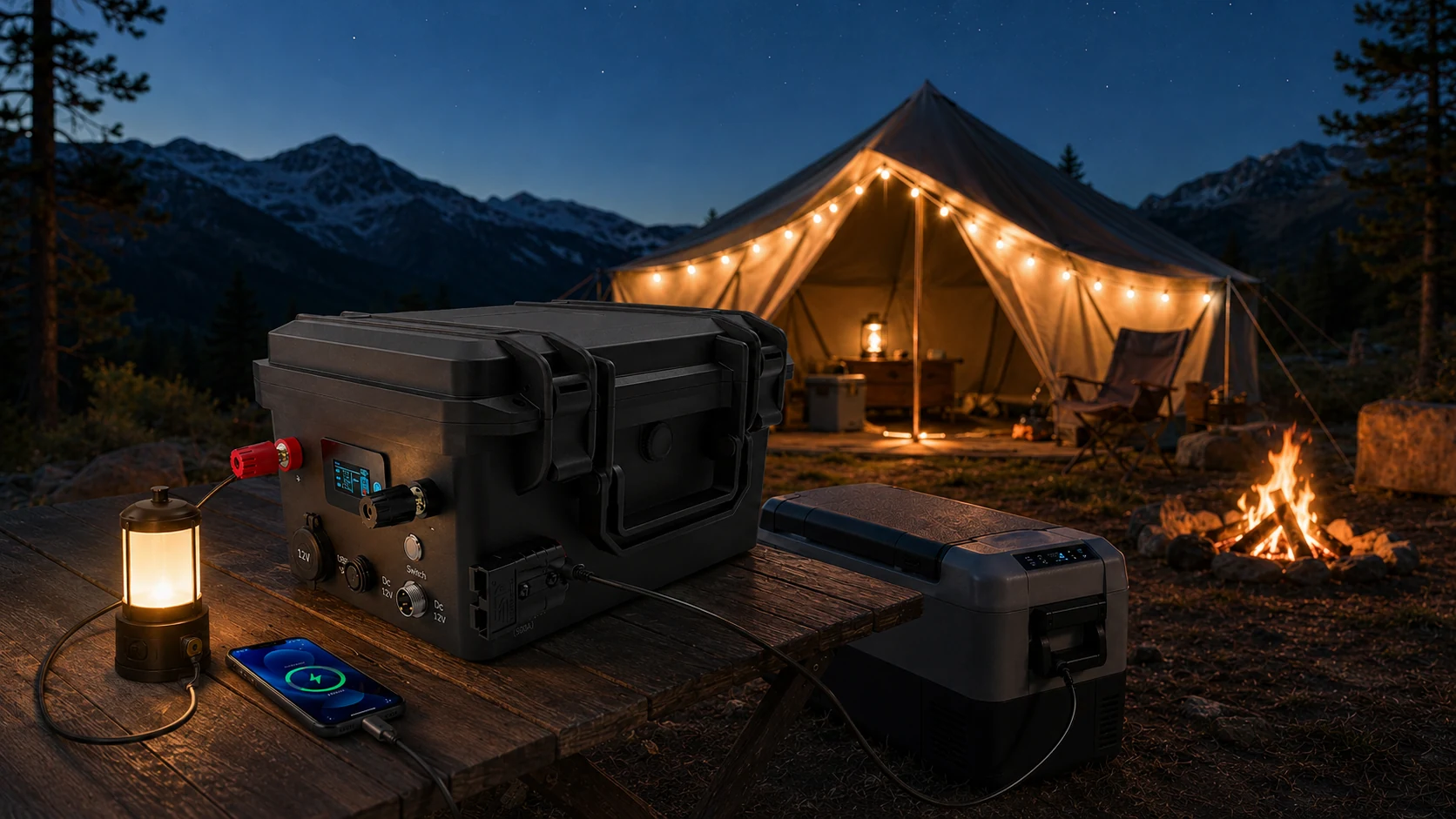
Why LiFePO4 is popular for mobile power
LiFePO4 chemistry is well suited to mobile power because it offers stable voltage, good cycle life and a safer thermal profile than many other lithium chemistries. Compared with lead-acid batteries, a well-designed LiFePO4 battery can provide more usable energy from a smaller and lighter package.
Match capacity to daily energy use
Start by listing the devices the user wants to power, their wattage and daily operating time. Capacity should be discussed in watt-hours as well as amp-hours, because watt-hours make runtime easier to understand across different voltages.
Check output ports and interface layout
Portable LiFePO4 batteries are judged heavily by user experience. The enclosure, handle, terminals, display, USB ports, DC outputs and charging interface should be easy to understand. For OEM projects, define the interface layout at the beginning.
Think about charging methods
RV and off-grid users may charge from solar panels, a vehicle alternator, shore power or an AC charger. The product design needs to match the expected charge current, charger voltage and protection behavior.
Conclusion
A portable LiFePO4 battery for RV and off-grid use should be designed around real user behavior: what people power, how they charge, how they carry the product and how they understand the interface.
Developing a portable LiFePO4 battery line?
Share your target market, capacity, port layout, branding and quantity with BINGOS.